Description
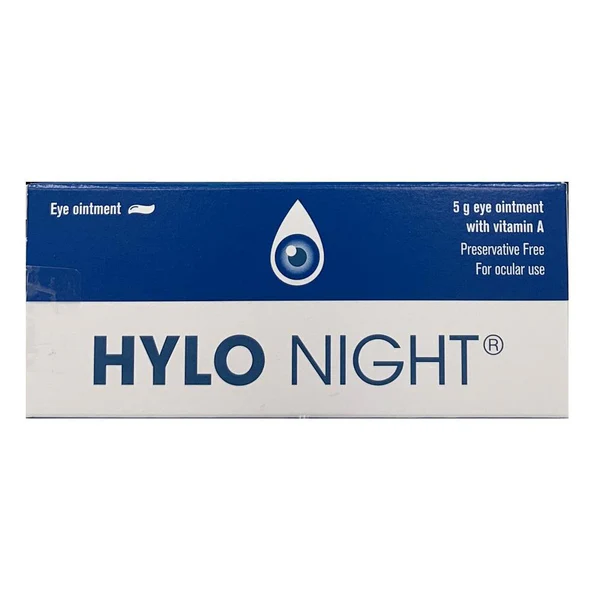
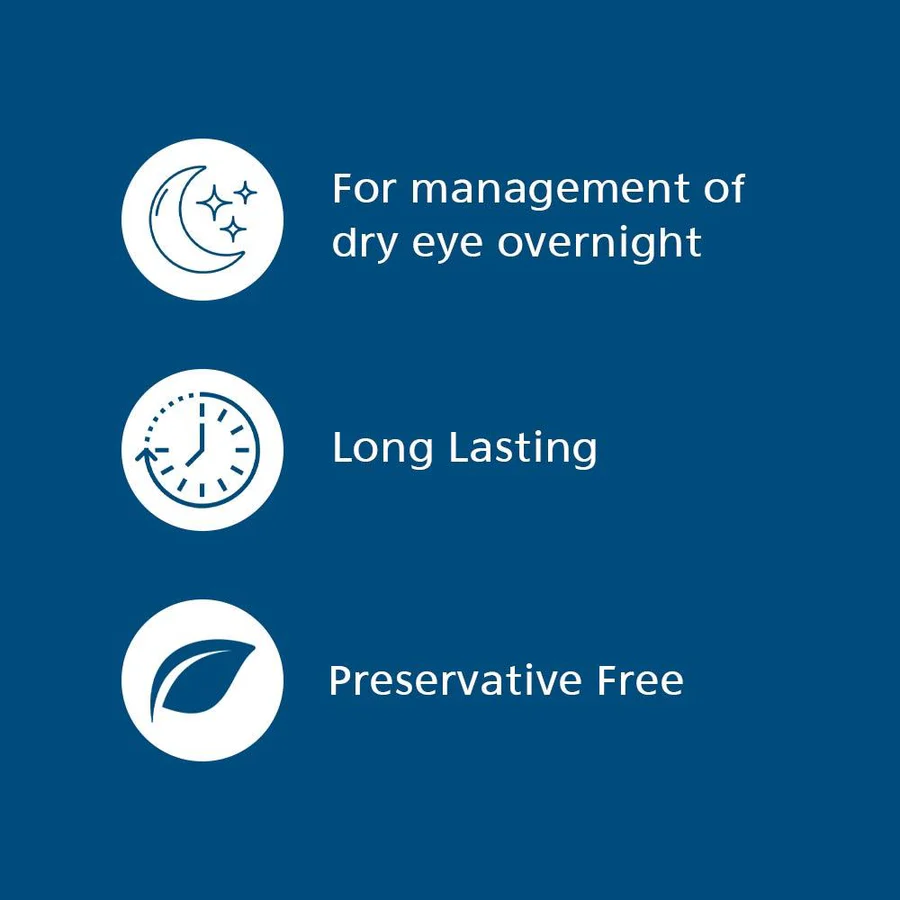
Hylo Night eye ointment is a particularly soft and smooth eye ointment that spreads very well on the eye surface and provides lasting protection. Preservative free. Formerly known as Vita-Pos eye ointment. Hylo Night eye ointment is one of our best selling products to relieve dry eye.
How Does It Work?
The ointment relieves the feeling of burning, dry or tired eyes. It contains vitamin A (retinol palmitate), a natural component of the tear film, which ensures that the ointment mixes well with natural tear fluid.
How to use:
Suitable for use in adults and children. The frequency of application depends on the individual complaints and habits. In case of distinct sensation of dry eyes Hylo Night is usually used three times daily. Usually the application before going to bed at night is particularly recommended.
Leave an interval of at least 15 minutes before instilling another ophthalmic medication. Eye ointments should be applied at last.
- Remove the protective cap before use.
- Tilt your head back slightly and gently pull the lower eyelid away from your eye with your finger of one
hand.
- With the other hand hold the tube in an upright position above the eye.
- Instil a small strip (1 cm) of eye ointment into the gap formed between the eye and eyelid by gently squeezing on the tube.
- Close your eye gently, then blink normally.
- Replace the cap firmly back onto the tube. To avoid contamination, do not allow the tip of the tube to touch the eye or any other surface.
Hylo Night may cause blurring of vision because of the greasy consistency of the eye ointment. You should not drive a car, take actively part in traffic, use machines or work without secure hold during this time.
Hylo Night can be used during pregnancy and lactation.
HAZARDS & CAUTIONS
- HYLO NIGHT should not be used when a hypersensitivity to one of the ingredients is known. HYLO NIGHT should not be applied while contact lenses are worn.
- HYLO NIGHT should not be used directly after ophthalmic surgery or in acute injuries of the eye as no clinical studies exist for this purpose.
- Stop treatment and consult a physician if irritation persists or worsens or new eye signs or symptoms develop.